A Week at the Asian Rural Institute
22 December 2025
Opening
Last Obon vacation, I visited the Asian Rural Institute in Tochigi as a working visitor. ARI is a communal learning center whose mission is to build an environmentally healthy, just, and peaceful world.
This was my third visit. My earlier stays lasted only three days, and each time I left wishing I had stayed longer. This time, I decided to remain for at least a week.
What is Asian Rural Institute?
On my first visit, my girlfriend introduced me to the Asian Rural Institute. I was surprised that such a place existed so close to Tokyo, where local community leaders from all over the world come to learn about organic farming and servant leadership. What surprised me even more was that ordinary people like us are also welcome. Visitors can take part in farm work and experience communal living.
The participants come from many regions, including Africa and Asia. They are local church leaders, teachers, or emerging NGO leaders who want to learn servant leadership and how to use local resources to support their communities. They stay for nine months, learning not only at the center in Tochigi but also through visits to institutions across Japan. Alongside them are long-term volunteers who stay for several months or more, and working visitors who come for shorter periods, from one week up to sixty days.
On my earlier visits, which were always brief, I was assigned only light farm work like planting seeds, harvesting beans, picking berries, or sorting potatoes by size. That made sense since for short-term visitors, it’s practical to give tasks that require little training.
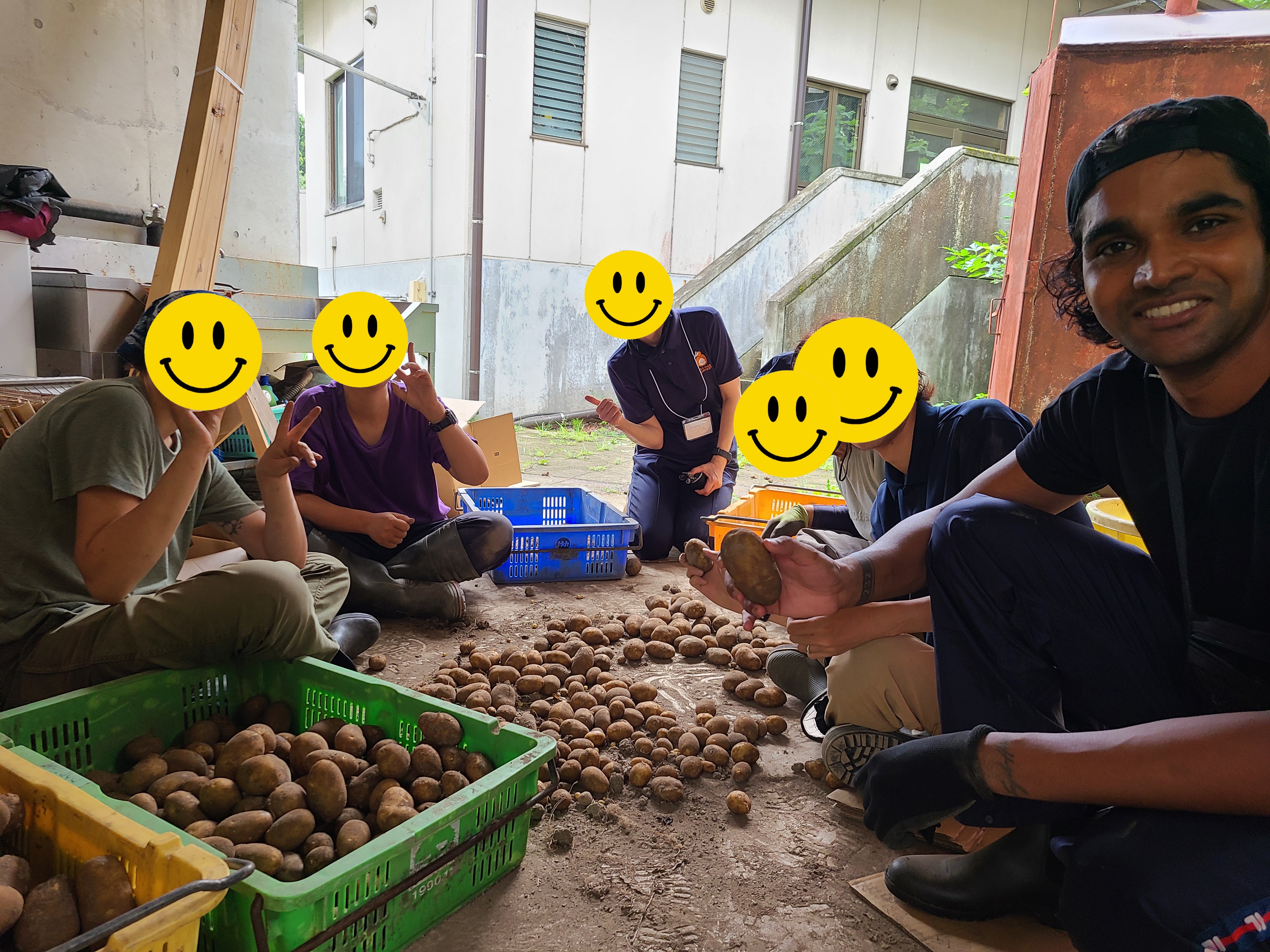
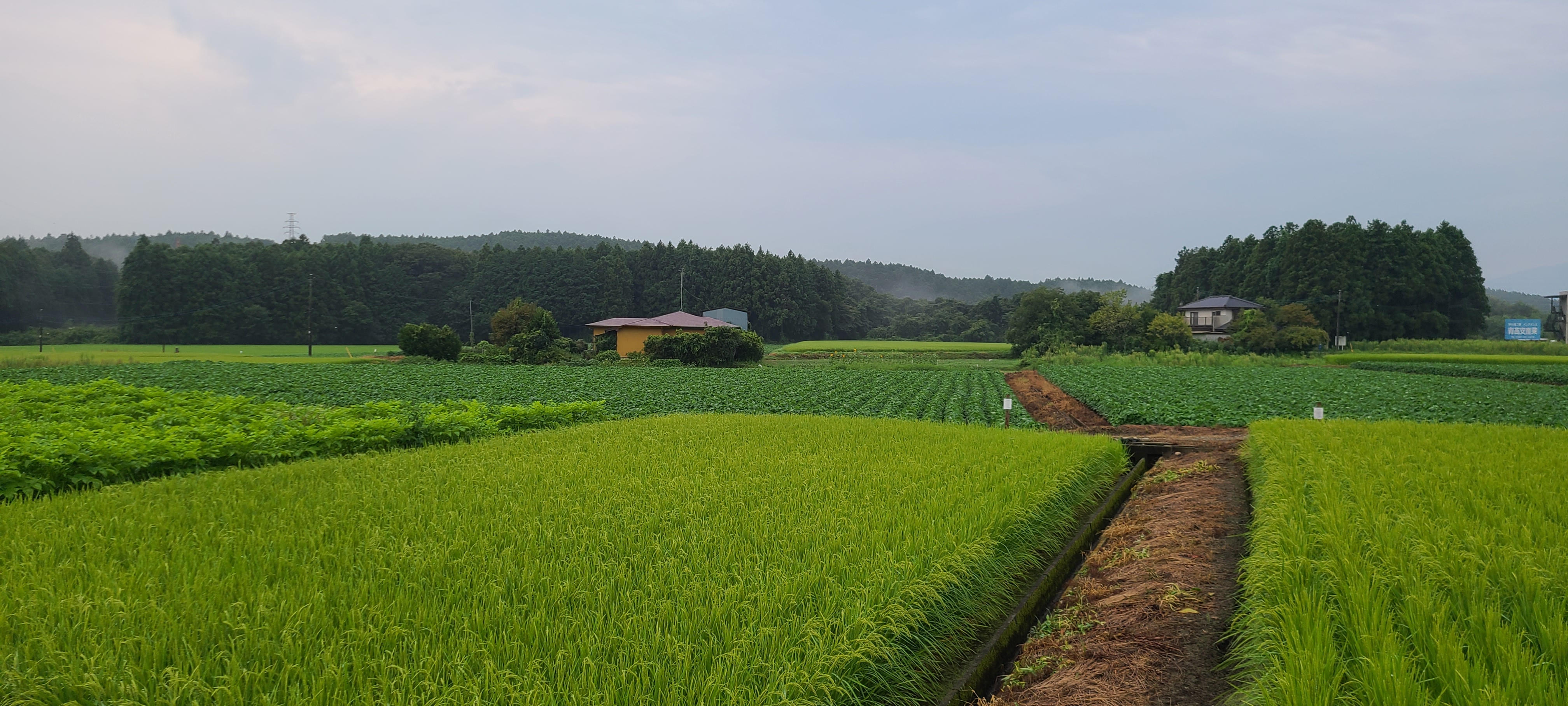
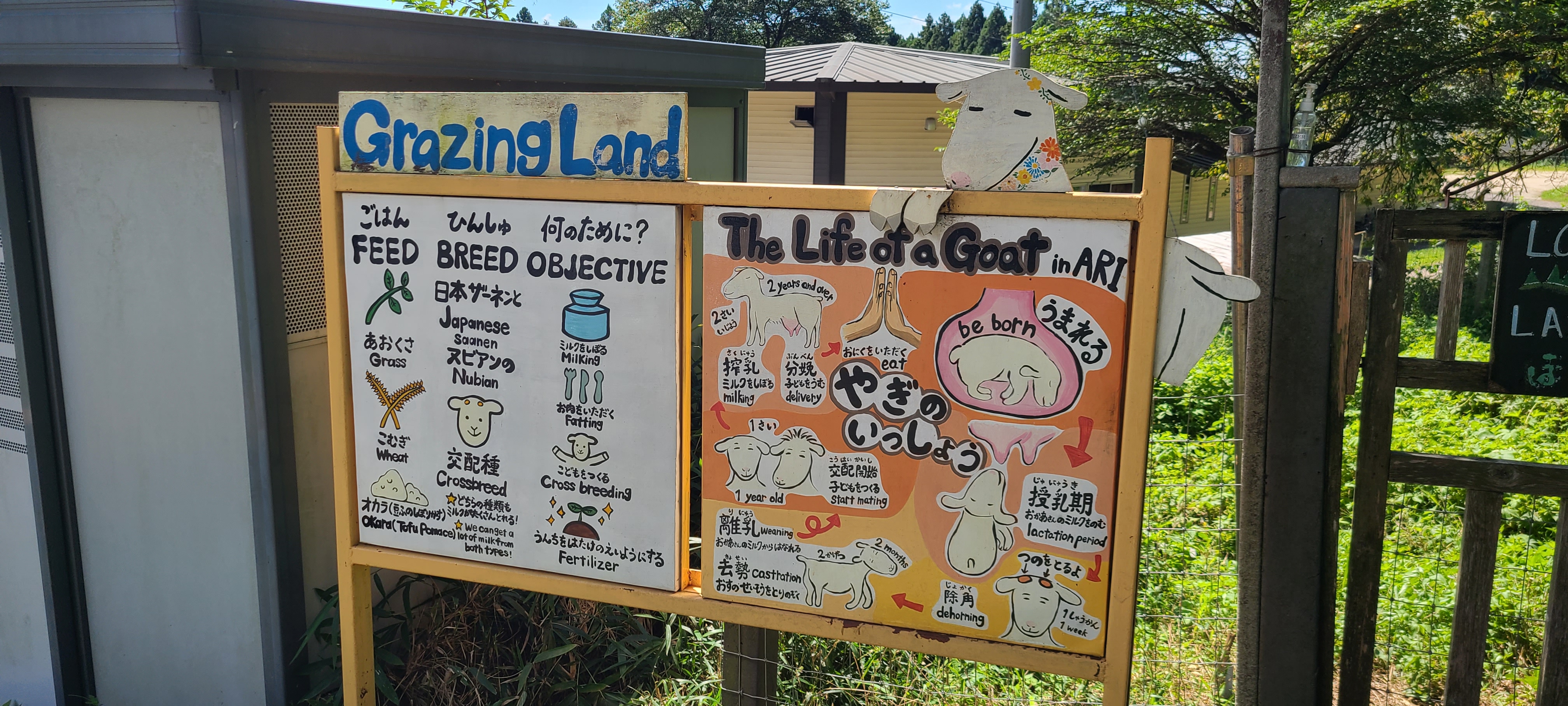
This visit was far better than the last two. The main reason was that I finally got to work with animals. On every previous visit, I had hoped to work with the animals, but there was never an opportunity. This time, we asked if it would be possible, and they readily accepted.
Daily Rhythm
We arrived on the first day in the afternoon. After the usual introductions, we received our work and room assignments and took a tour of the campus. Although this was my third visit, I still learned new things on the tour. After introductions, we were given time to rest and could choose whether to start work or not. We then returned to our rooms.
This time, we were assigned separate rooms. I went to the men’s dormitory, where the rooms have twin beds and are often shared. On my earlier visit, I had a room to myself, but this time I had a roommate, a young Japanese college student spending his summer vacation at ARI. We bonded quickly, speaking English most of the time and switching to Japanese when needed.
After a quick refresher, I decided to join the evening food-life work. The task was simple. Cleaning eggs collected from the henhouse. It was a familiar sight. On my first visit to ARI, we were given the same job.
The work is relaxing. You scrape off dirt from freshly laid eggs with a blade, then wipe them clean with a wet cloth. As you work, you talk. People talk a lot, almost constantly. Everyone wants to chat, and that is one of the best things about ARI. Much of the work is physical, which makes conversation easy.
While cleaning eggs, I spoke with several people, including a returning visitor who had become a volunteer this time. It was encouraging to hear that they enjoyed their one-week stay so much during their last visit that they decided to spend an entire year here.
After finishing the work, I returned to my room, took some rest, and then went for dinner.
Dinner is served sharply at 18:30 every evening. The kitchen volunteers prepare whatever dishes they enjoy cooking that day. When the food is ready, they ring a bell to call everyone together. We choose a prayer from the wall and offer a short, one-minute prayer. After that, we line up for the meal.
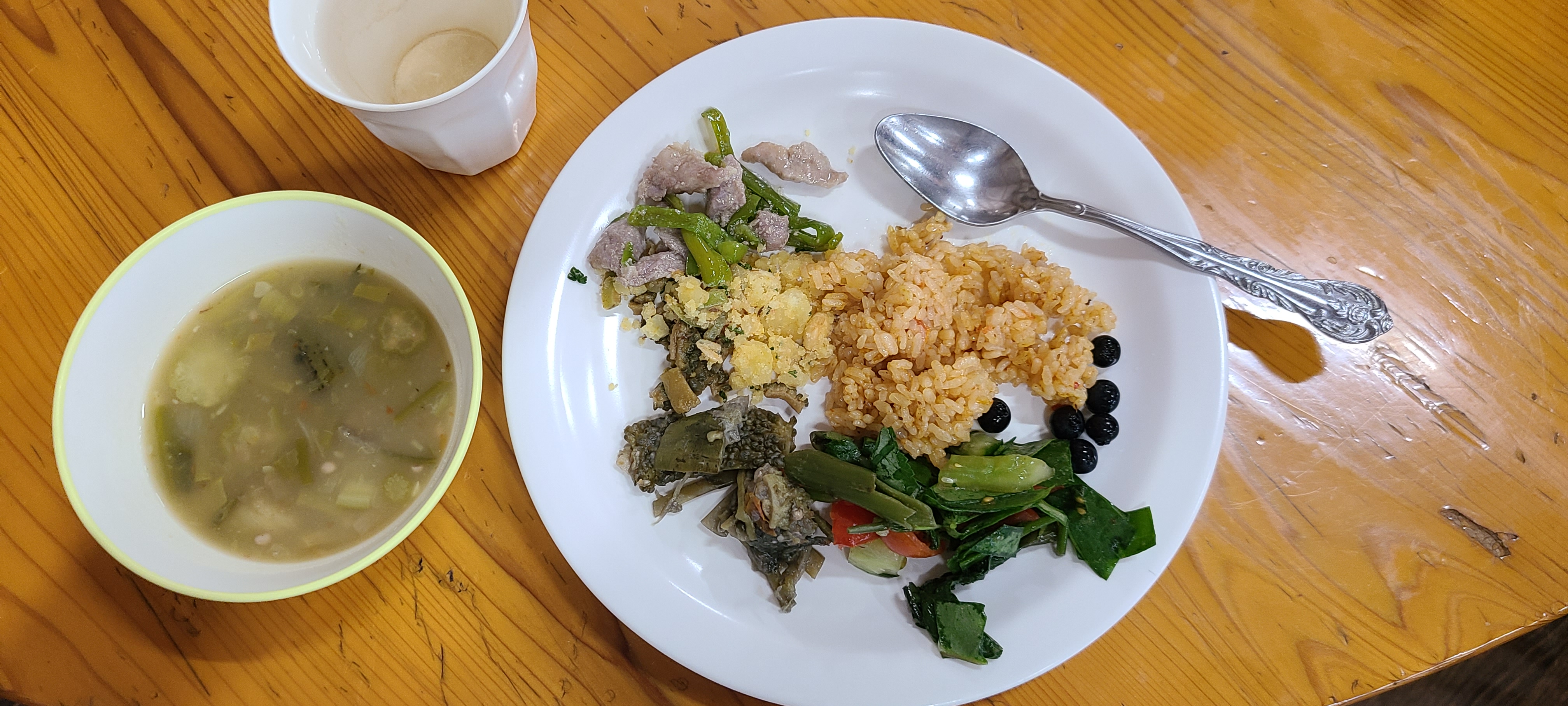
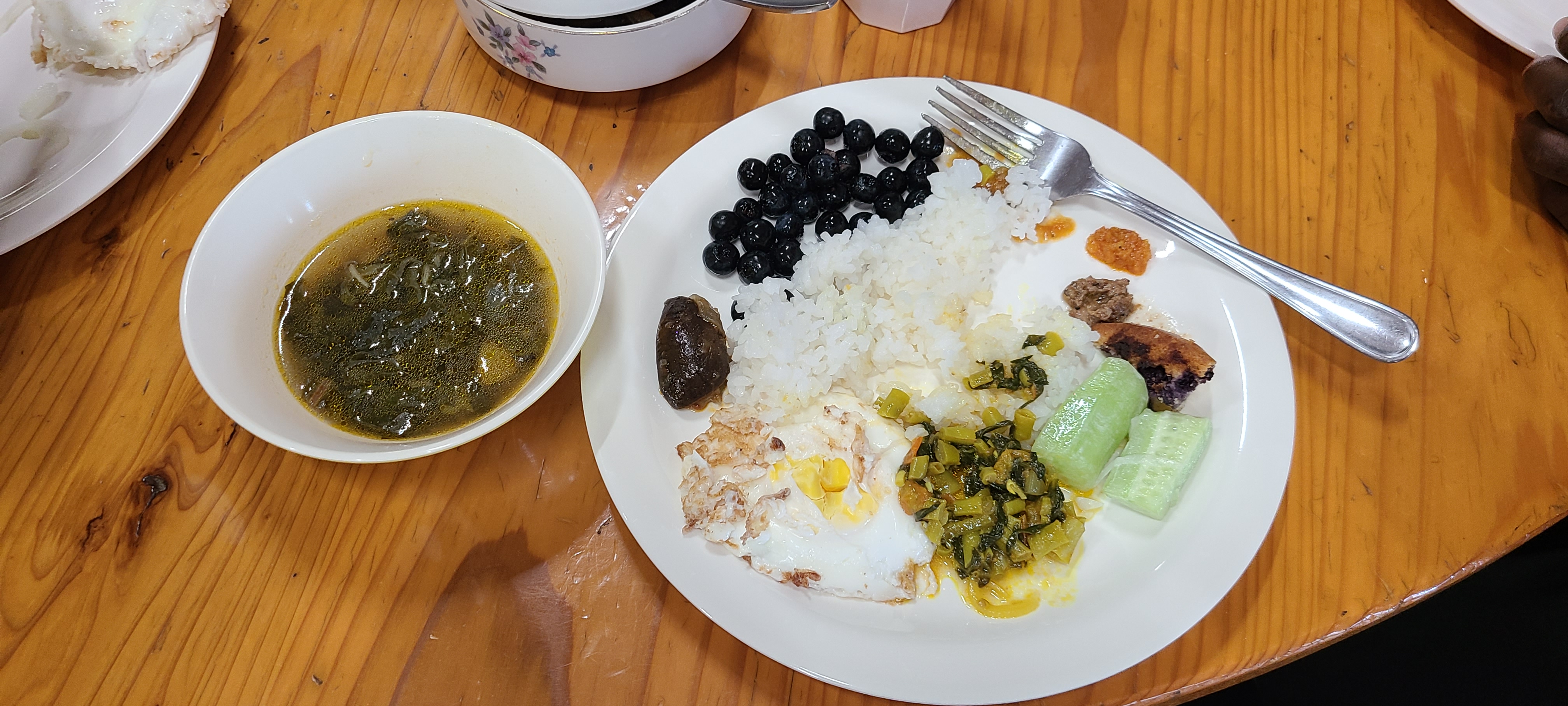
The food is always delicious and full of nutrients. It tastes fresh coming straight from the farms, and carries the care of the people who prepared it. Some participants bring spices from their home countries, so you may find yourself tasting dishes you have never had before. Separate vegetarian dishes are also prepared, ensuring that everyone is considered. All the meals are had at Koinonia which is a large hall with several round tables for people to sit together and share their meals together.
For anyone considering a visit, this is what your first day might look like. It begins early in the morning. Here is the daily schedule.
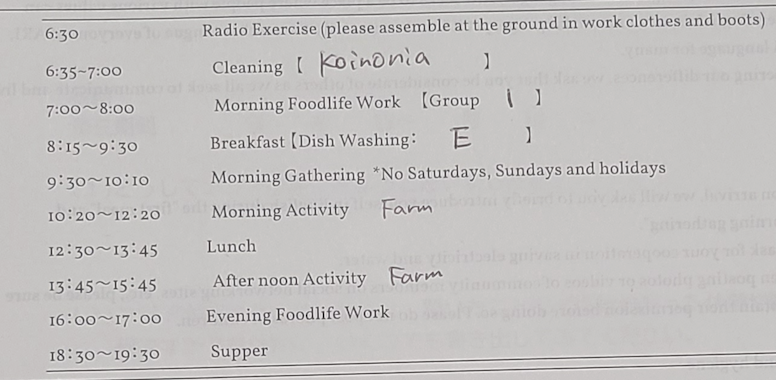
Next morning, we woke at around five a.m. and went to help with the morning farm work at a carrot field. Our task was to pull out the small weeds growing close to the carrots. It was simple but required care. The weeds looked almost identical to the young plants, so we had to be careful not to uproot the carrots themselves.
After that, we planted new carrot seeds. Each hole took about ten seeds. We pressed a small hollow into the soil with our thumbs and dropped the seeds in. The work wasn’t physically demanding, but it demanded attention. Earlier plantings, we were told, had already failed more than once. We worked for about an hour, then left the farm to return for Morning Rajio Taiso.
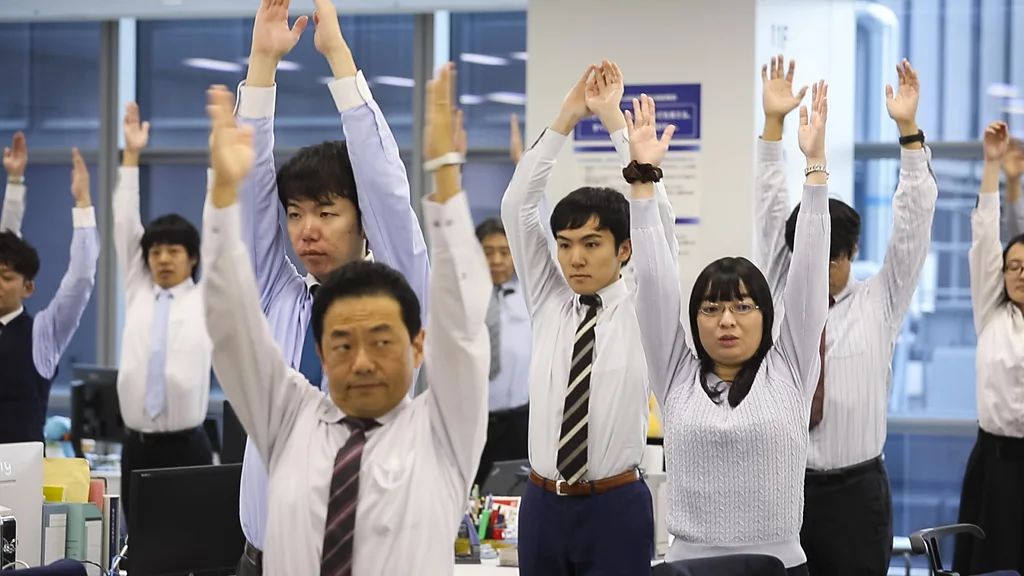
What is Rajio Taiso? It’s a morning radio programme which guides listeners through basic stretches to limber up for the day’s tasks. Apparently, all Japanese school children are made to do this in school. It is one of the traditions I like in Japan. A quiet insistence on taking good care of one’s health.
After the stretching session, we join our group for a quick 5-minute meeting, where the day’s tasks are assigned. The participants I mentioned earlier work on long-term projects in small groups. Volunteers and short-term visitors like us join them when available. These tasks are planned weeks in advance.
Once we received our assignment, we began with cleaning duties. Everyone is assigned a place to clean upon arrival at ARI. Our regular assignment was Koinonia, the large hall where we have our meals and gatherings. After about half an hour of cleaning, we went on to our work assignments.
After cleaning, we head out for our morning work. Groups usually gather near the main entrance and leave from there. Before breakfast, the work is usually food-life work on the farm, as I mentioned earlier. If you have already worked very early in the morning, some tasks may be skipped, so the schedule can change from day to day.
After work, we return for breakfast. The food is fresh and comes straight from the farms. Some mornings include a brief introduction of new people, or a short prayer. Before we eat, we say a simple prayer. Although the institute is affiliated with the church, no one is required to pray or to believe. After the prayer, we choose one of the many round tables and line up for a buffet-style breakfast. The tables are round so that everyone faces someone else, which makes conversation easy. We talk about why we came here and what we like about ARI.
After breakfast, we head to our main morning activity. During this visit, our work was at the pig pen, so we went there directly. I describe that work later in this post.
When the morning work ends, we return for lunch. The routine is much the same as breakfast: a short prayer, followed by the meal. After lunch, there is usually free time to rest. During this visit, several events were taking place at ARI to mark the 80th anniversary of the end of World War II. I have written about those further down in the post.
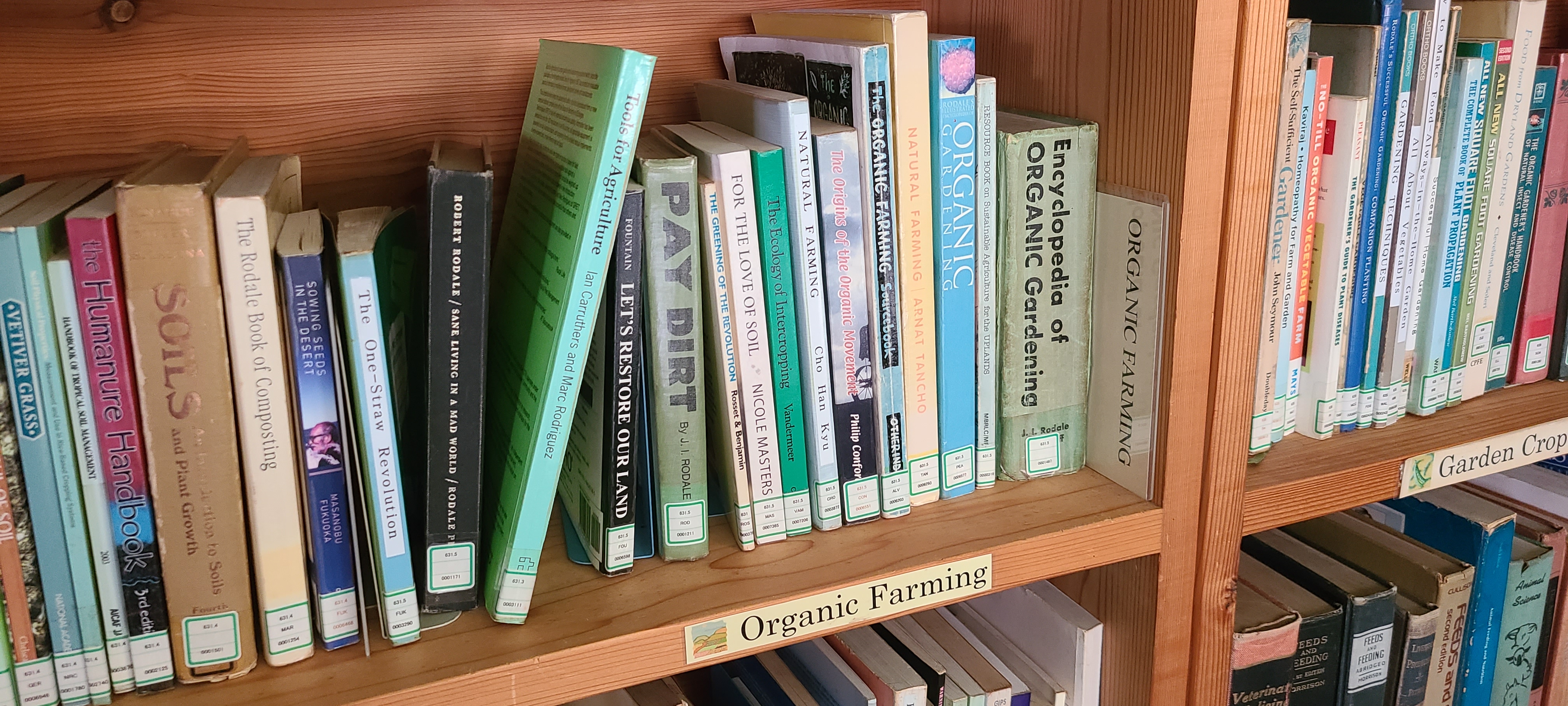
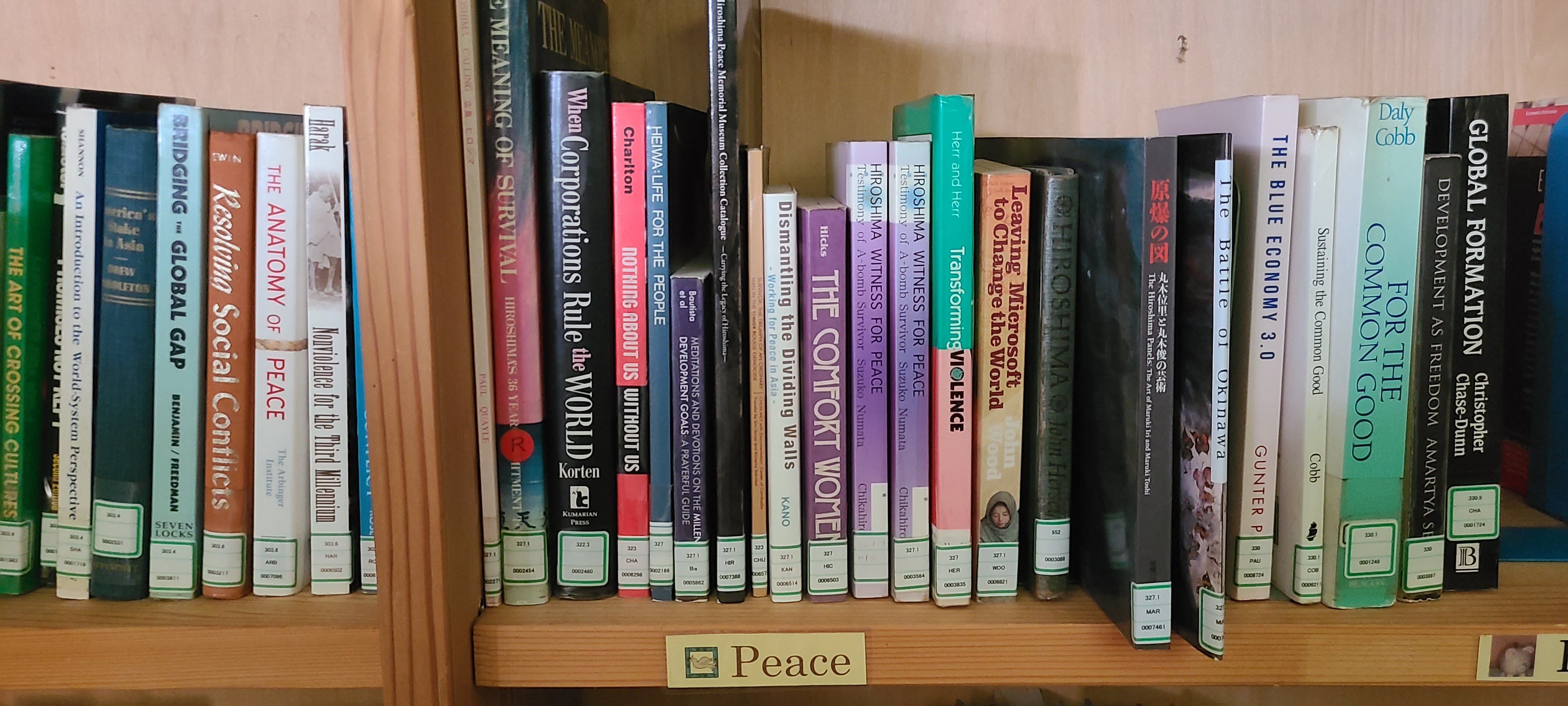
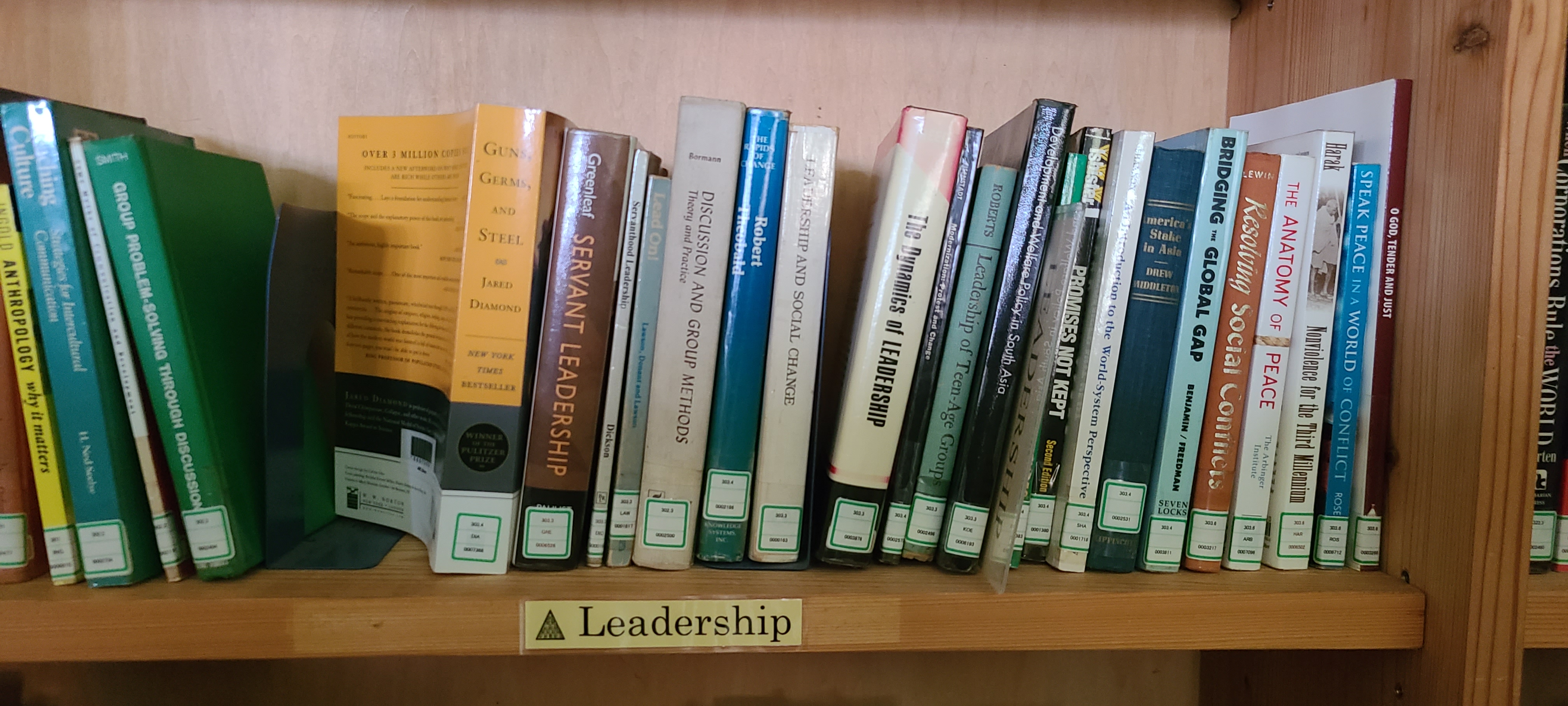
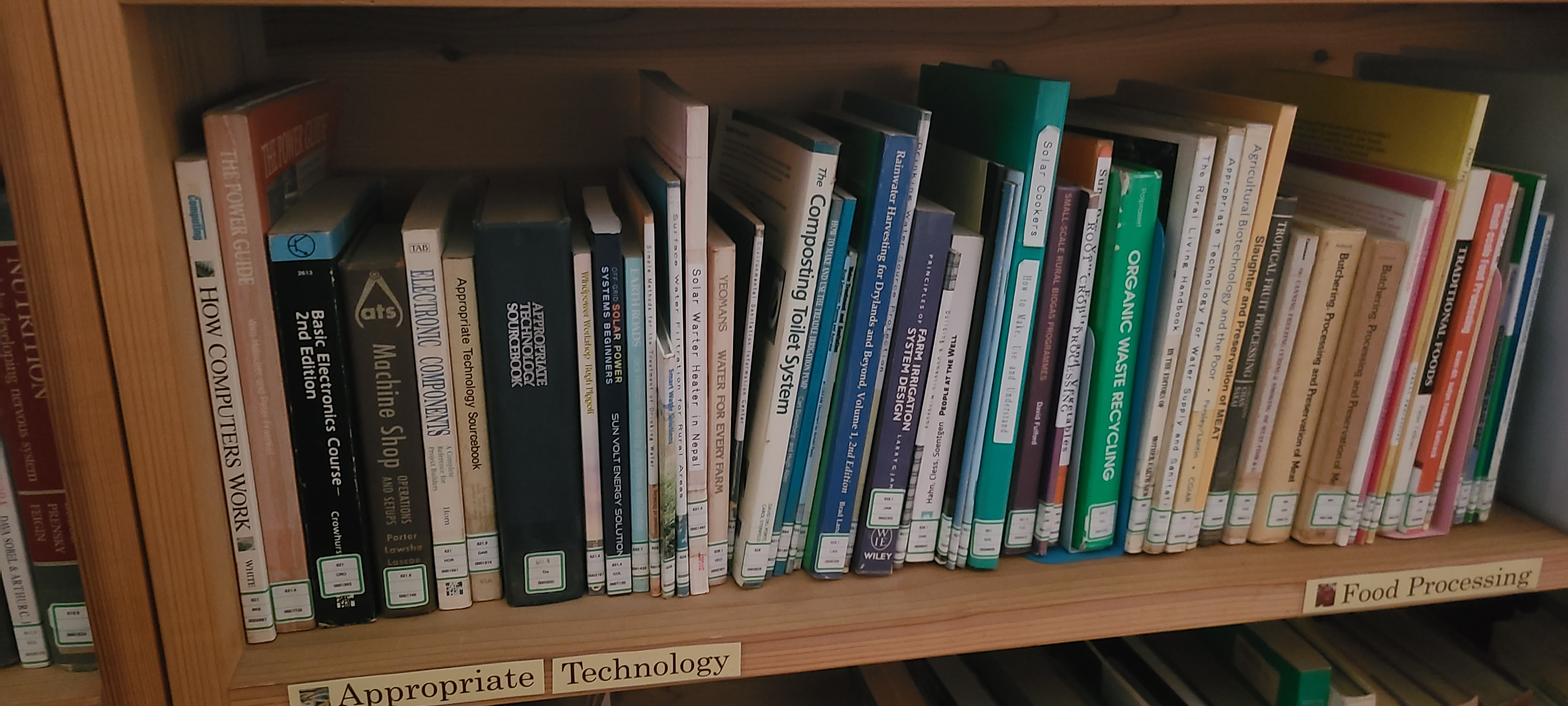
In the afternoons, participants usually return to their coursework, while others relax as they wish. I often go to the library. It holds books on farming, animal husbandry, peace, language and culture, practical repair, and agricultural machinery. If you enjoy books as much as I do, you would love this library. It has also inspired me to start building my own, though mine will be digital.
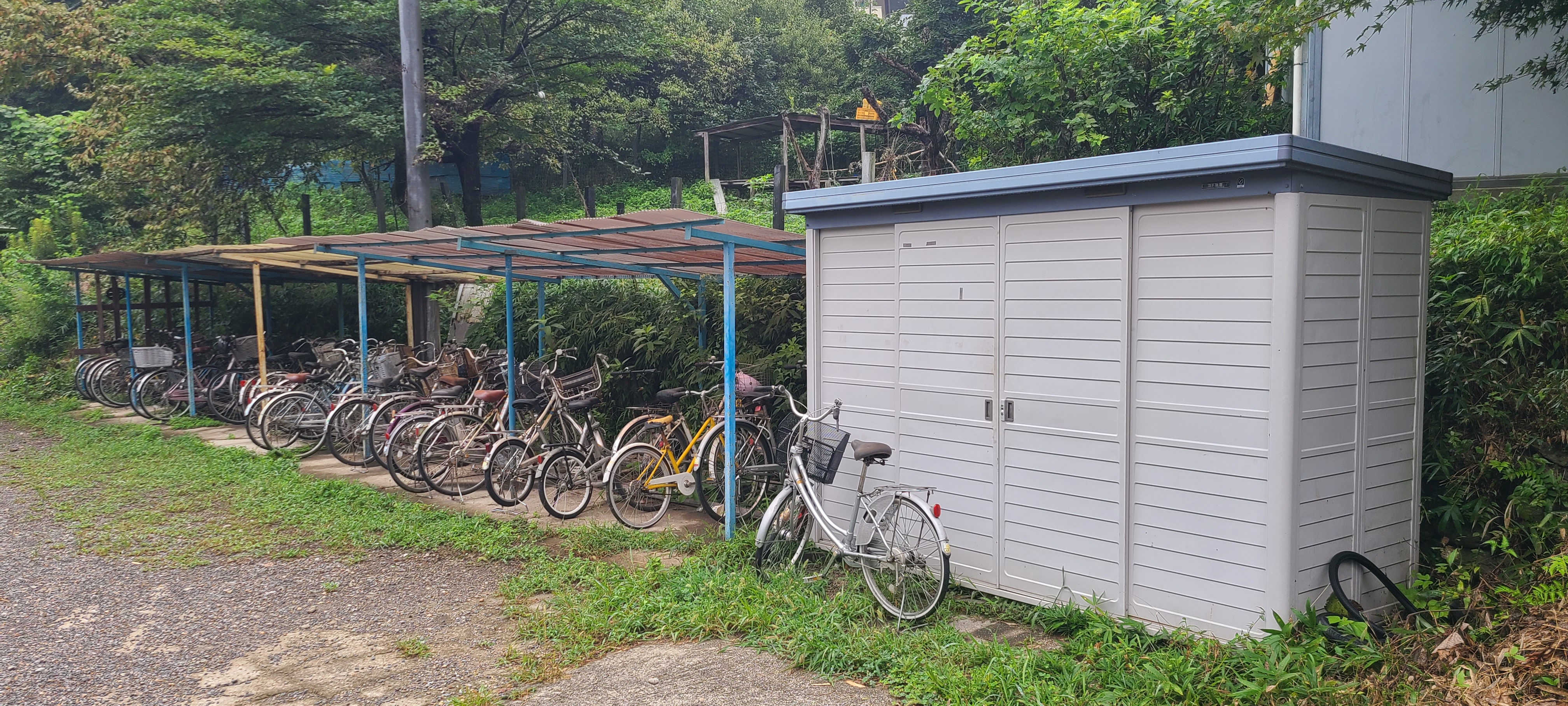
If you want a short break or need to visit the local convenience store, you can ask to use one of the bicycles. As long as a bicycle is not already assigned to someone else, it is fine to use it.
For those who want to get some work done, there is Wi-Fi in Koinonia. The connection is usable but not very fast. There is no Wi-Fi in the dorm rooms, and the cellular signal is quite weak. You should not expect a reliable internet connection in your room.
After free time and rest, we return to our rooms. We shower again if needed. In the evening, we head out for our assigned duties. During this visit, both our morning and evening duties were at the pig pen, which I describe elsewhere in this post. After the evening work, we rest until dinner. After dinner, we talk for a while, then go to bed early to prepare for the next morning’s work.
Animal Farm
Here is my favorite part of the visit. This time we asked to work with the pigs. Luckily, they agreed, since we did not need to go through a quarantine period. To note, Visitors from outside Japan are not allowed to work with animals for at least a couple of weeks.
Before entering the pig pen, we had to wear special boots that reached up to our knees. Then, before entering the pig house itself, we stepped through buckets filled with alcohol and lime.
I was genuinely excited to finally work with animals. Our first task was to prepare their feed. A chart on the wall showed how much of each ingredient to mix for every pen. The portions differed depending on the pigs’ stage of growth, so we followed the chart carefully. Once the feed was ready, we poured it into the eating area of each pen.
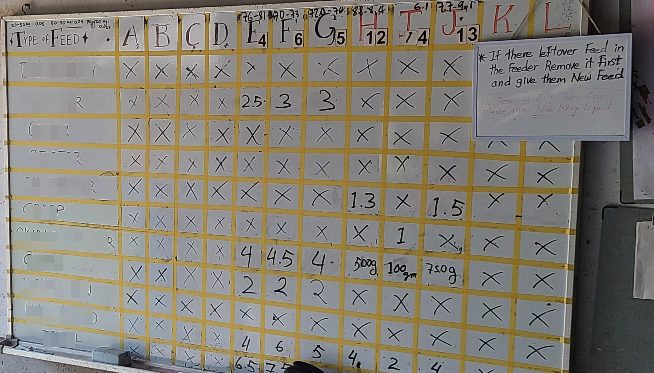
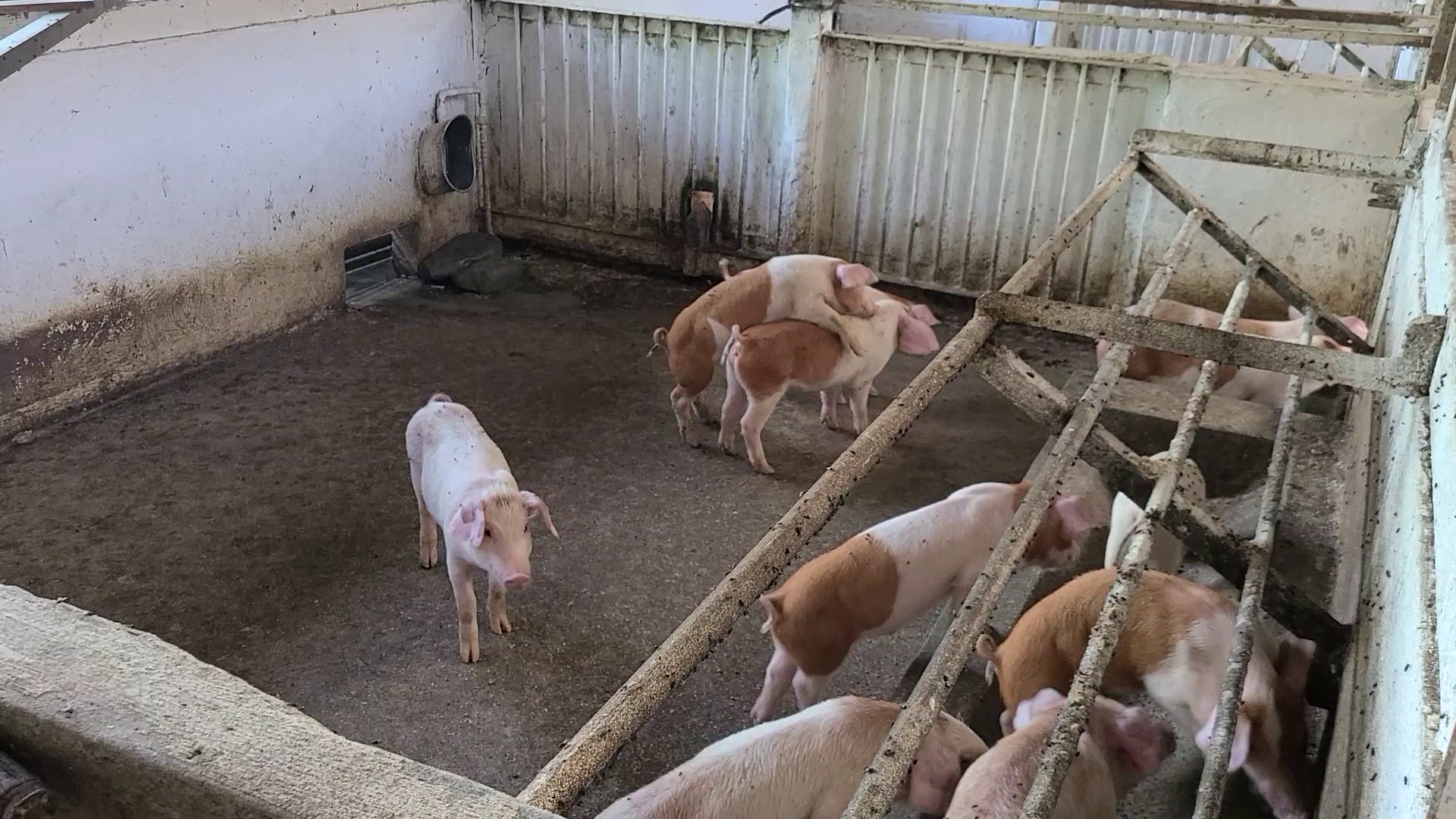
While the pigs ate, we cleaned the floor. They had left droppings everywhere, so we shoveled them up and spread fresh, dry sawdust to cover the ground.
I also helped carry small piglets from one pen to another. At first, I held them in my arms, and they shrieked at the top of their lungs. I was soon told this was the wrong way to do it. Piglets are not meant to be carried lovingly. Instead, you pick them up by one leg. When carried this way, they make no sound at all. It was strangely funny. Once they were in their new pens and properly fed, they quickly settled back into their routine.
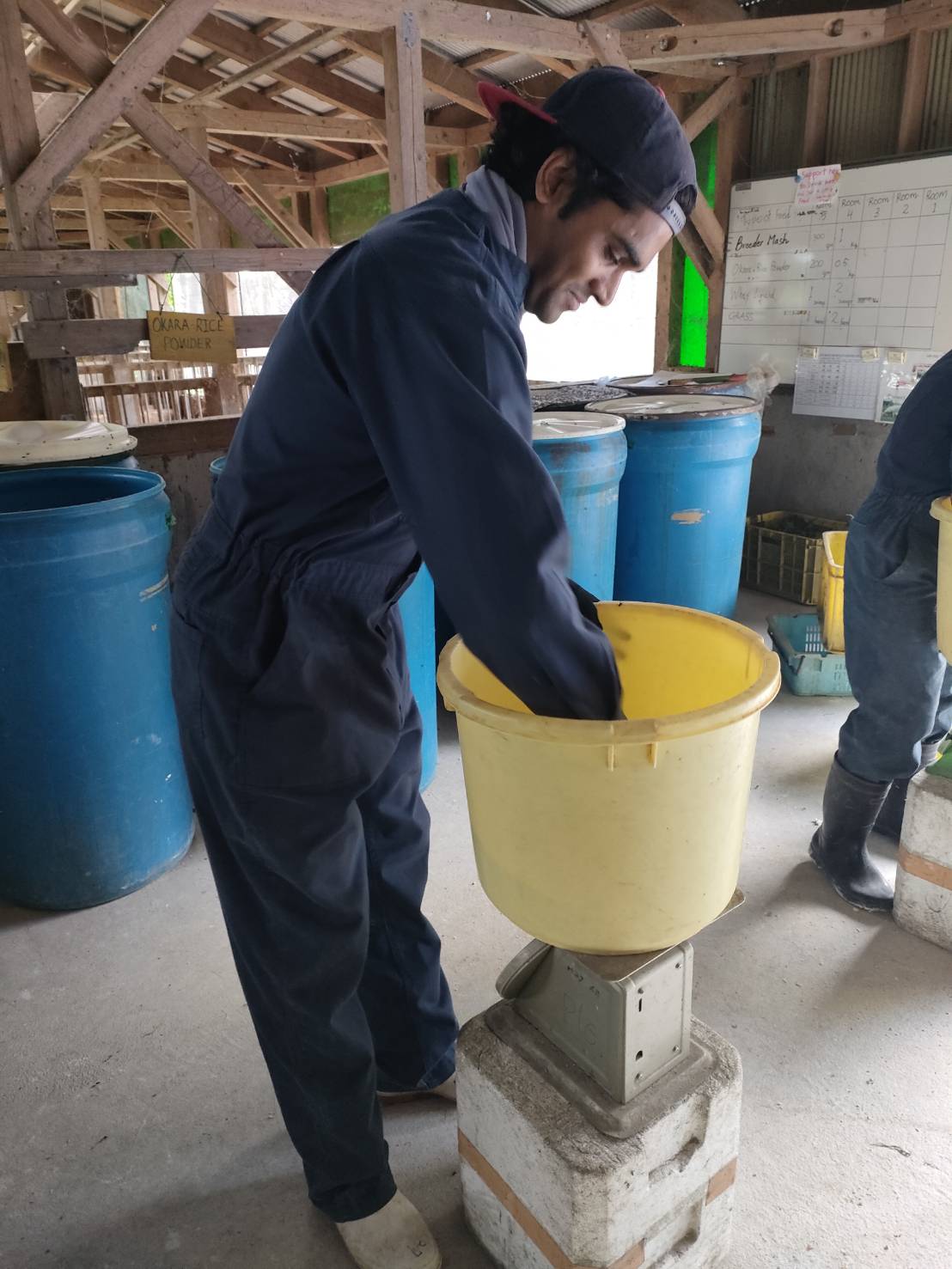
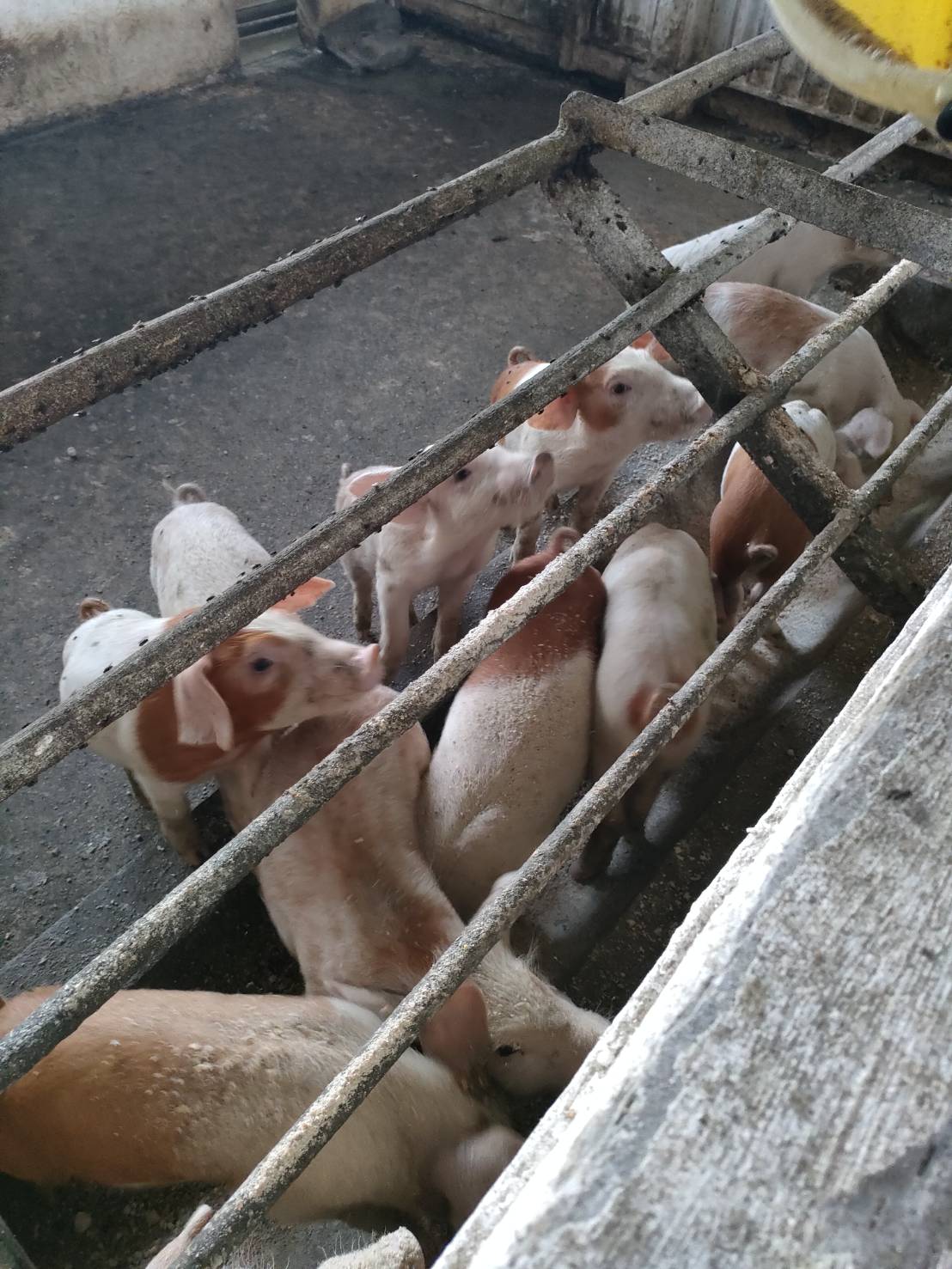
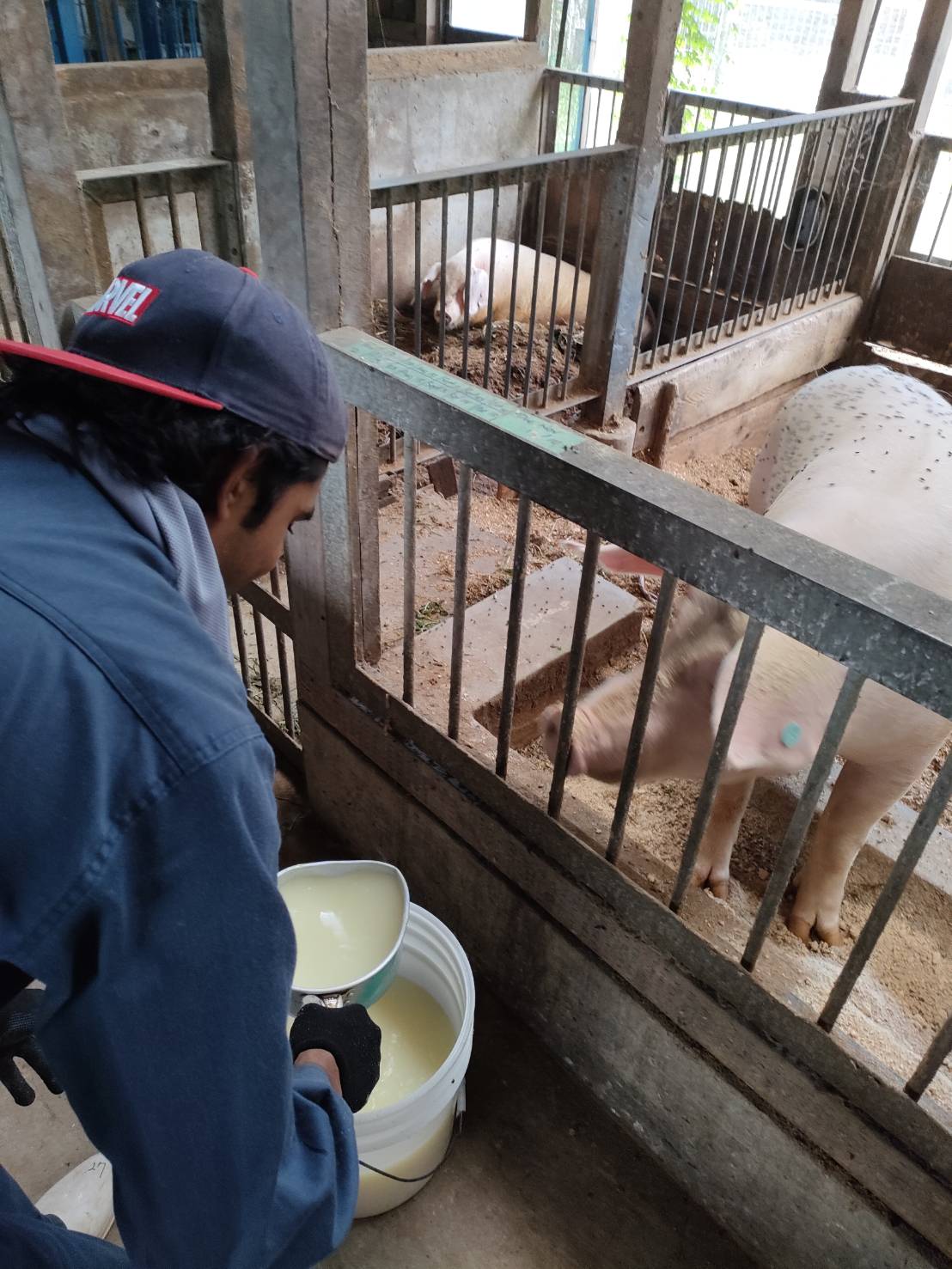
Next, I worked in the pen with slightly older pigs, what we jokingly called the “teenagers.” I cleaned the droppings near the pen door and covered the area with dry sawdust. The pigs were usually eating at this time and paid no attention to us. Occasionally, one would be in a playful mood and approach, sniffing at our clothes.
One day, we turned the bedding in the teenage pigs’ pen. The floor was covered with sawdust mixed with some soil. Over time, this bedding becomes wet and needs to be turned so it can dry out. This is important for the pigs’ health. These pigs were very friendly. They looked large, and stepping into the pen could be intimidating, but there was no real danger. When they were busy eating, they ignored us completely. When they were curious, they came over and sniffed us with their long snouts. They only wanted to play.
There was one sad moment during this work. A mother sow was sick during our visit. She was on medication, but she was clearly in pain. We had to place her in a large carriage. Even though we knew it was for her own good, moving her caused her a great deal of pain. Her cries were heartbreaking. Anyone who finds this hard to bear should stay away during moments like this. Hearing her suffer was deeply moving.
For the next few days, this became our daily routine at the pig farm. We prepared their food according to the feeding table and fed them. While they ate, we cleaned their pens. Occasionally, we prepared fresh sawdust and turned their bedding. This work was physically demanding, more so than farm work. Anyone who struggles with heavy physical labor would be better off sticking to farm tasks.
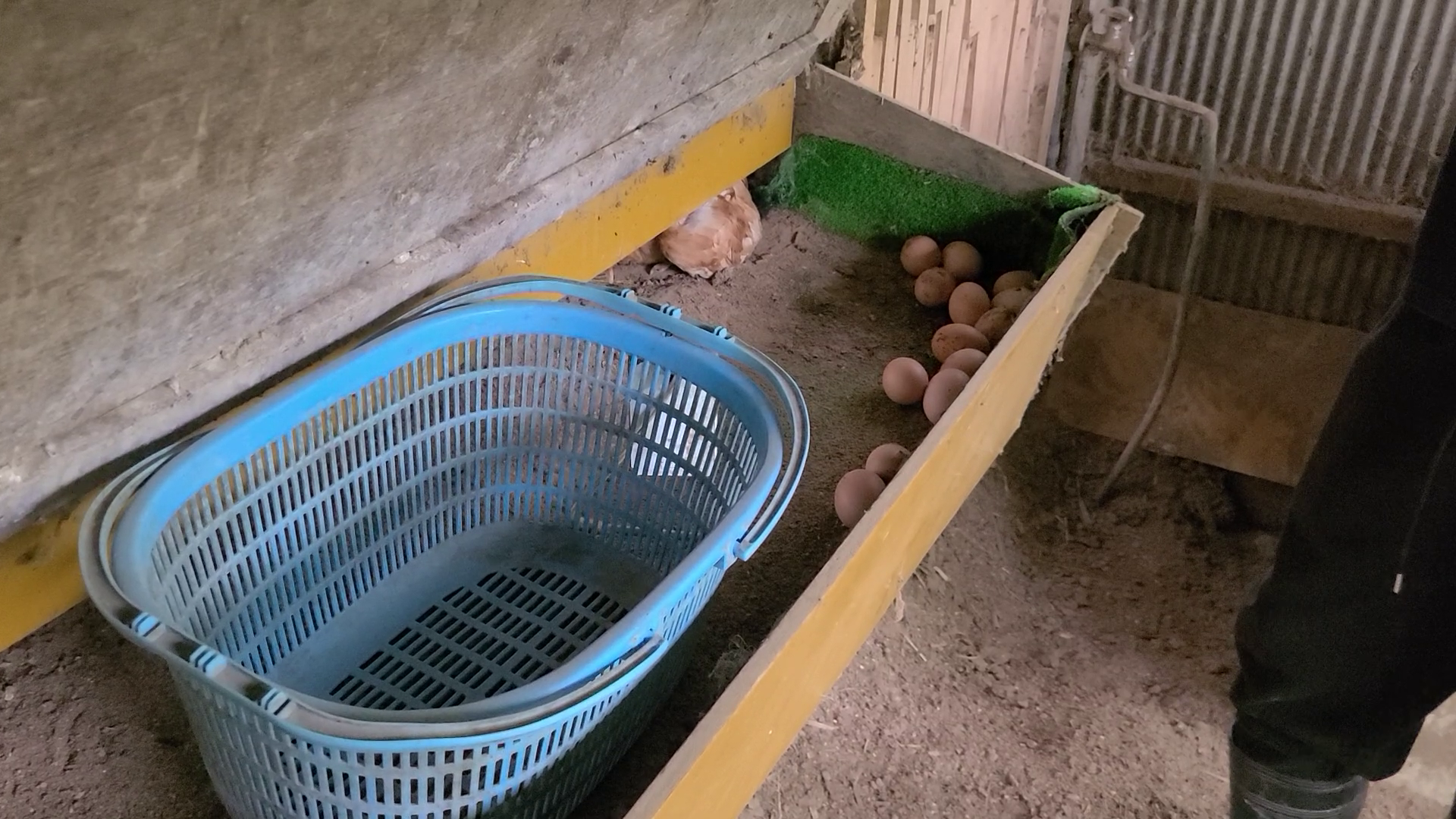
On the last day, I also worked with the hens. The routine was similar. We prepared their water, prepared their feed, and cleaned their area when needed. We also collected the eggs. I didn’t know that hens could be trained to lay eggs in a specific place. I’m not sure how it’s done, but the eggs we collected were the same ones I mentioned at the beginning of this post.
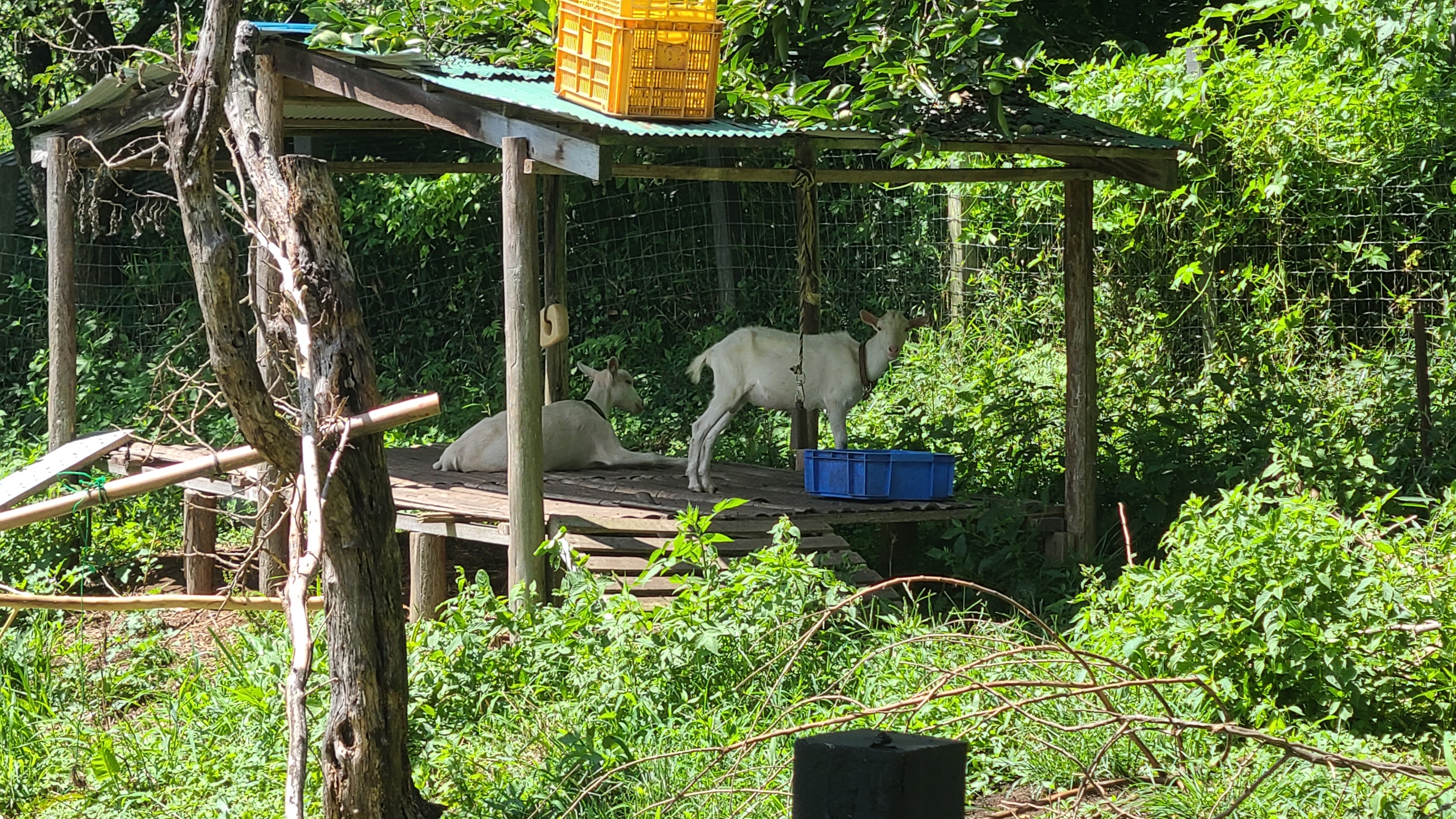
I didn’t have time to work with the goats on this visit. Hopefully, I will next time. I still don’t know which I prefer more: baby pigs or baby goats.
People and Encounters
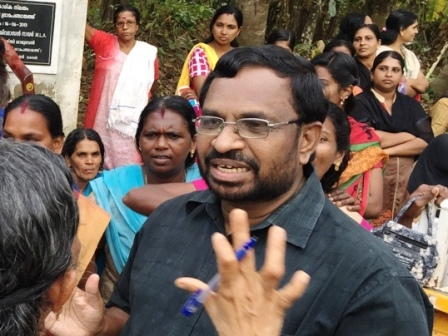
On our first evening, we met Dr. Thomas Matthew, a former graduate of ARI. It soon became clear that our visit fell during a special week. Dr. Matthew, once a student there, had gone on to start several projects in India and now serves as a peace ambassador for survivors of the Hiroshima atomic bombing. His life story was remarkable. After graduating from ARI, he earned two master’s degrees and a PhD, taught at a Japanese university, and now runs several NGO projects in India. Alongside this work, he advocates for peace by carrying the message of the Hiroshima survivors, known as the Hibakusha.
I have rarely encountered someone with such energy. He showed us photographs of meetings with Mother Teresa, President Abdul Kalam, and the Dalai Lama, and spoke of the honors he received from them. Despite these achievements, he spoke with humility, laughing easily and engaging openly with everyone in the room.
Peace Discussion
The next day, ARI held a peace declaration ceremony marking the 80th anniversary of the war’s end. Several leaders spoke of their personal ties to World War II through their ancestors. They described the atrocities committed by troops and the devastation of the Philippines, Indonesia, and Okinawa, including the part played by the Japanese military.
The discussion offered an important lesson in history, especially for those who had never heard these stories because they are not taught in schools. We also took part in group discussions on how to promote peace in the world. One idea came up again and again. Inviting people to ARI so they can speak with others from different countries and come to understand the futility of war.
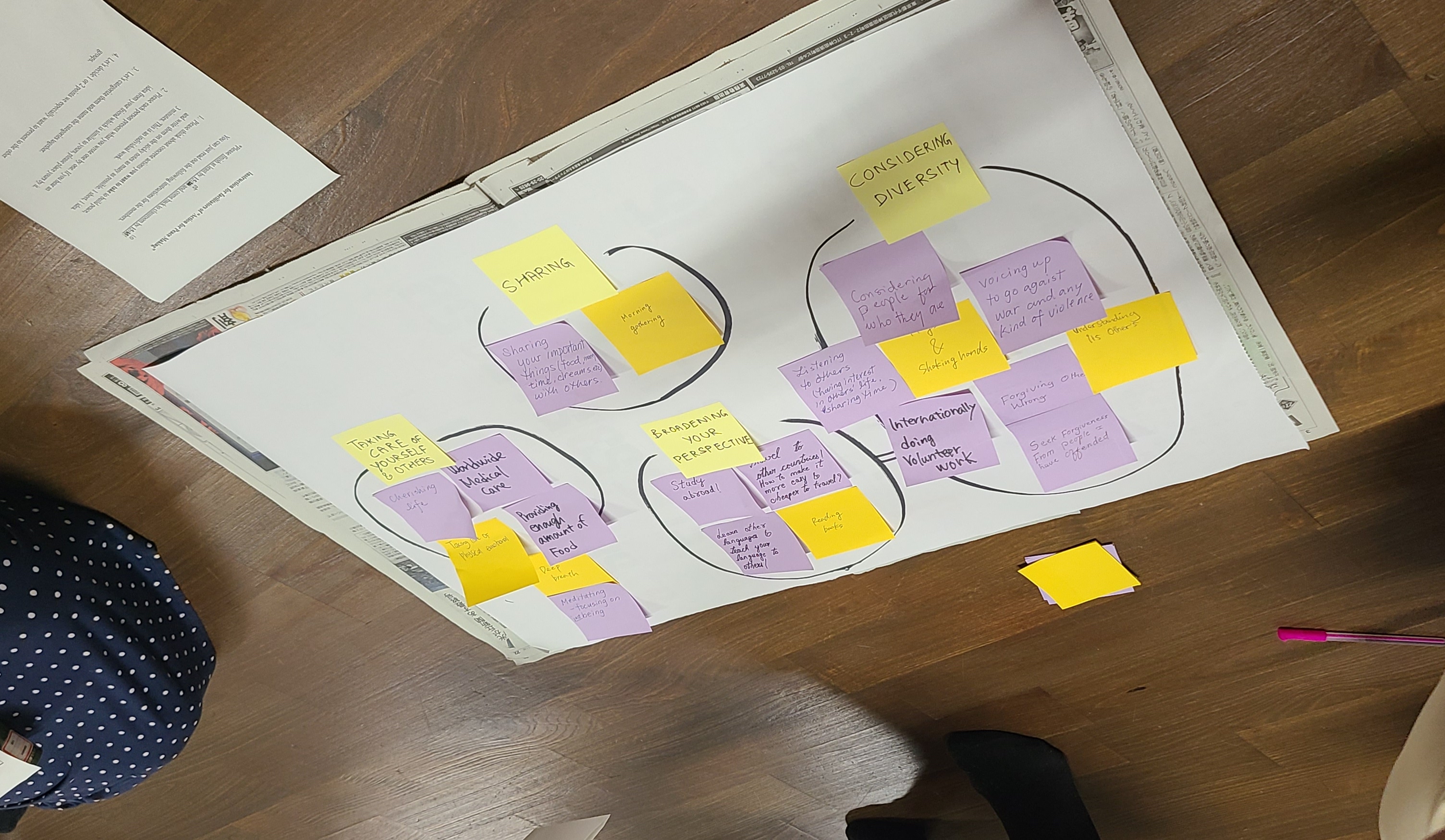
We also had the chance to go on a picnic, which I believe was part of the peace celebrations. We traveled to the Yu River near Tochigi and visited Ryuzu Falls, a cascading waterfall said to resemble a dragon climbing the mountainside. We were divided into pairs and matched with someone at random. Each pair was asked to speak with one another, learn about the other person, and later write down three things we had learned. After a short hike to view the falls, we returned to the riverside for a picnic. It was a memorable experience.
Church Visit
On the final day, we were invited to attend the church service with the rest of the community. It was a new experience for me, as I had never been to a church service before. The service was led by Chaplain Timothy, who was warm, articulate, and very funny.
The congregation welcomed us, and, as is customary, we briefly introduced ourselves. Later, I spoke with a member from Liberia and learned about the country’s history and how it continues to shape daily life there. We took several photographs, then returned to the institute to pack our bags and prepare to leave. As always, visiting ARI was a wonderful experience.
Practical Information
Getting There
Train:
From Tokyo Station, take the Tōhoku Shinkansen to Nasu-Shiobara. Transfer to the local JR line toward Utsunomiya and get off at the next stop, Nishinasuno.
A slower but cheaper route runs from Shinjuku. It requires several transfers, so plan ahead if you choose this option.
Taxi: At Nishinasuno Station, taxis are easiest to find at the West Exit. Tell the driver “Asia Gakuin” (アジア学院). The ride takes about 10 minutes and costs roughly ¥1,400 (fares may vary). If no taxis are waiting, call Shiobara Jidōsha (Nishinasuno office) at 0287-36-0005.
Rules
If you plan to work with animals like pigs, goats, or chickens, make sure you have not travelled outside Japan in the past two weeks.
For farm work, there are no quarantine requirements, as far as I know.
Who this place is for
If you are someone who is interested in natural farming, communal living, meeting with people from around the world, spending time in nature, or working with animals, ARI will suit you well.
You don’t need to be in peak physical conditino. People from all ages are there, and you work only to the extent you are able. That said, the days start early, and everyone takes part in cleaning and manual labor.